

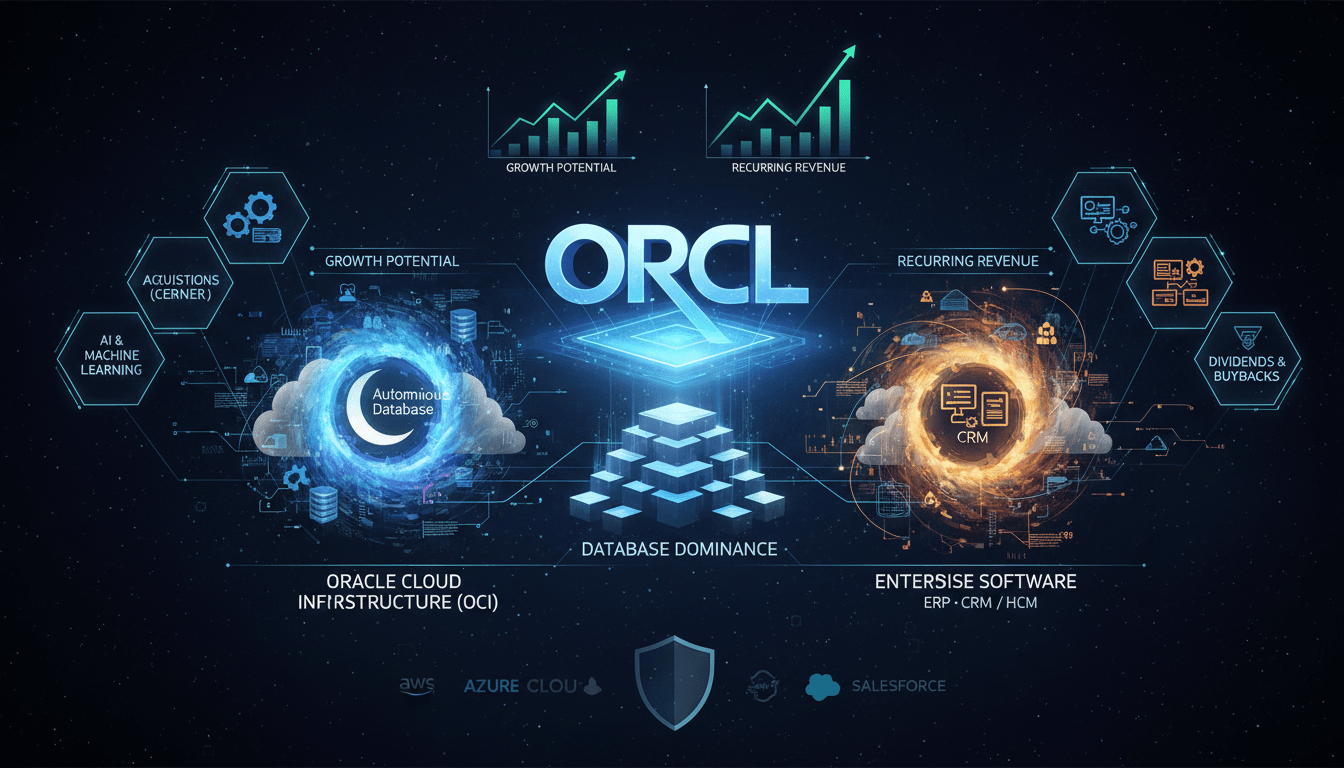
Oracle’s stock (ORCL) is currently hovering around $139–$140, reflecting a steep correction from its highs in late 2025 and early 2026. After surging during a strong cloud and AI growth period, the price has dropped sharply amid concerns over escalating debt, heavy capital expenditure, and investor skepticism about AI cost structures.
Market Movement and Key Drivers
Sharp Downturn and Investor Anxiety
This week, Oracle has endured its worst eight-day stretch since 2002, with shares falling more than 25%, culminating in a closing price of around $136.48 on February 5, 2026. Market sentiment has soured due to concerns over Oracle’s AI infrastructure costs, escalating debt, and its intertwined financial ties with OpenAI.
Debt-Fueled Expansion Plans
Oracle is attempting to raise $45–50 billion in 2026 to fund AI infrastructure, splitting the financing roughly between debt and equity. Notably, it completed a $25 billion bond offering attracting $127 billion in demand, signaling that at least some investors still trust its execution capacity. Nonetheless, credit default swaps have surged, signaling wariness in the debt markets.
Mixed Financial Performance Amid AI Backlog
Oracle’s Q2 FY2026 results showed revenue of about $16 billion (up ~14%), slightly missing expectations, but its remaining performance obligations (RPO) skyrocketed—hovering between $455b and $523b depending on reporting source. Cloud growth was strong (IaaS +68%, SaaS +11%) and multicloud segment exploded, up 817% YoY, reinforcing long-term demand despite short-term margin pressure.
Analyst Sentiment & Forecast Range
Current Analyst Price Targets
Wall Street remains cautiously optimistic:
- Morgan Stanley trimmed its target to $213 (from $320).
- Mizuho and Jefferies maintained bullish views with targets reaching up to $300–$400.
- TipRanks average target stands near $302, with upside potential surpassing 80%.
Broader Forecast Perspectives
- CoinCodex / Benzinga project a 2026 range of $235–$333, averaging around $284, indicating modest upside.
- MarketBeat indicates an average target of $296, estimating 100% upside.
- Long-term prognoses place late-2026 in base-case $250–$320 range, while bear-case estimates dip to $150–$220.
Technical Signals and Market Behavior
On the charts, there’s mention of a falling wedge formation—typically a bullish reversal pattern—suggesting potential for a bounce if Oracle breaks above the upper trendline. A critical near-term pivot would require a clean breakout and sustained hold, failing which the downtrend may persist.
Why the Story Isn’t One-Dimensional
It’s easy to paint Oracle’s situation as bleak, but the narrative is nuanced:
- On one hand, debt is skyrocketing—surpassing $100 billion—with credit markets signaling caution.
- On the other, the company’s data infrastructure and deep enterprise integration provide a uniquely defensible moat in the AI shift. One investor noted:
“You cannot train or fine tune serious enterprise models without clean, structured, governed data.”
This commentary underlines that Oracle’s strength lies not just in capital firepower but in its embeddedness in business-critical data systems.
Strategic Outlook: Bull, Base, or Bear?
Bull Case (>$300 by year-end)
- Sustained AI-driven cloud demand and rising RPO convert into strong revenue.
- Oracle tames its capex spike and navigates debt cost effectively.
- Analyst optimism, including $400 targets, become realized.
Base Case ($200–$300)
- Growth continues but is curbed by margin pressure and capex-heavy structure.
- Revenue rebounds but market remains wary over debt burden and free cash flow.
Bear Case (<$200)
- AI infrastructure outlays underperform; contracts disappoint.
- Debt concerns intensify, leading to lower valuations and subdued sentiment.
Conclusion
Oracle stock is navigating turbulence—plummeting from its highs amid aggressive funding and AI investment strategies. Although its RPO backlog and cloud growth signal long-term promise, elevated debt and credit risks temper enthusiasm. Analyst forecasts straddle the optimistic and conservative, ranging from $200 to over $400. Technical cues like a potential wedge reversal may hint at resilience, but recovery hinges on Oracle’s ability to translate AI infrastructure into sustained, cash-generating growth while managing financial fragility.
FAQs
What’s driving the recent drop in Oracle’s stock?
Heavy capital spending on AI infrastructure, rising debt, and investor uncertainty regarding Oracle’s OpenAI ties and future cash flow have spurred the decline.
How high could Oracle stock go according to analysts?
Analyst targets vary widely, spanning about $200 to $400+, with consensus averaging near $300—reflecting both bullish and conservative outlooks.
Is Oracle’s AI investment worth the risk?
There’s strong logic behind the bet: Oracle is well-positioned as a backbone for enterprise AI with massive RPO growth. Still, cost management and debt discipline will determine success.
When might we see a stock rebound?
A rebound could emerge in mid-to-late 2026 if Oracle demonstrates improved margins, a manageable debt trajectory, and cloud revenue acceleration.
Could Oracle’s debt threaten its credit rating?
Yes—its rising debt and heavy capex prompted negative outlooks from rating agencies, and CDS pricing has reached heights not seen since the 2008 financial crisis.














Leave a comment