

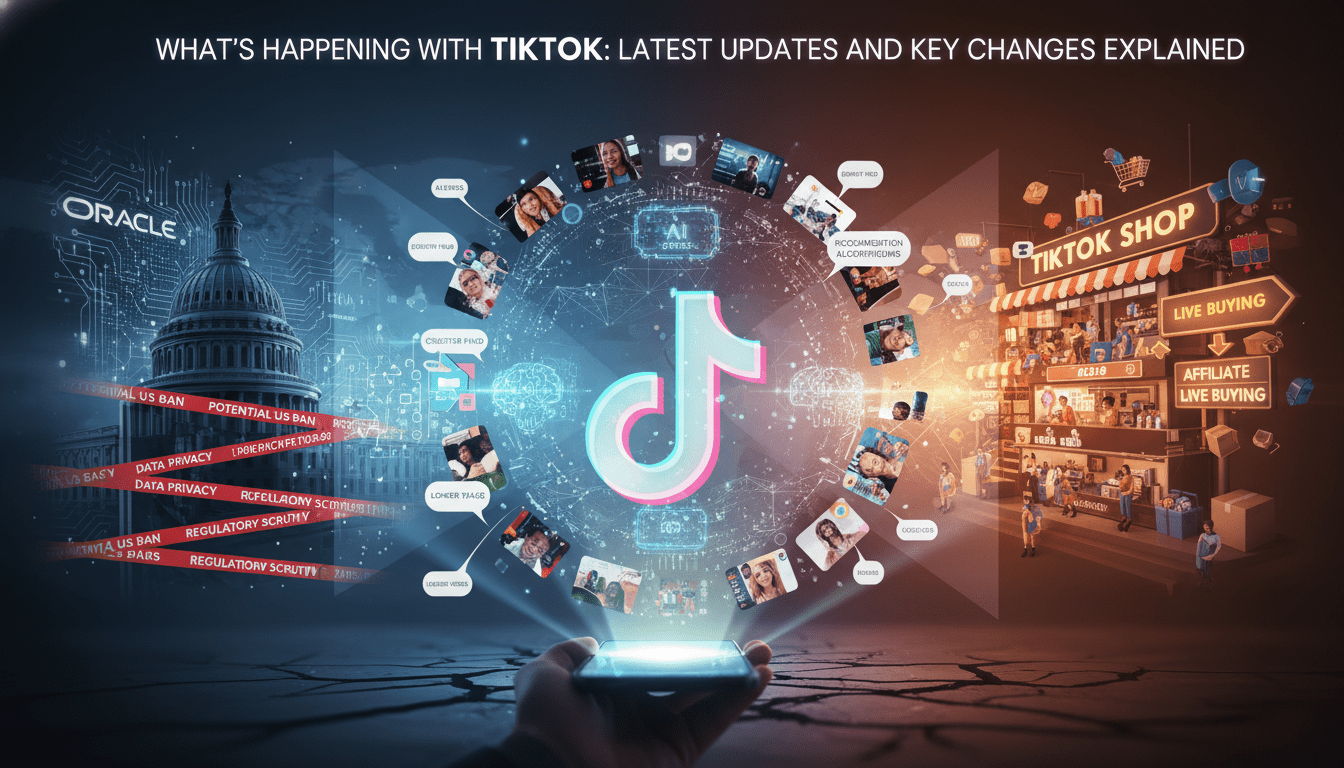
TikTok remains fully available in the U.S. thanks to a new American-led venture that finalized in January 2026—Batting aside prior fears of a ban, this move shifts operational control and data safeguards to U.S. partners while ByteDance retains a minority stake, pending regulatory scrutiny.
U.S. Ownership Restructuring: The TikTok USDS Joint Venture
In response to mounting national security concerns and a 2024 law mandating divestiture, TikTok negotiated a deal.
- On January 22, 2026, ByteDance completed a sale of TikTok’s U.S. operations to a new U.S.-based joint venture. The majority control now lies with American investors like Oracle, Silver Lake, and MGX, with ByteDance retaining a 19.9% stake but no operational control.
- The structure includes U.S.-managed data storage, algorithm oversight, and content moderation under national security safeguards.
- Oracle oversees both infrastructure and recommendation systems, reinforcing the separation from Chinese-based control.
This joint venture avoids the immediate enforcement of the federal divestiture law and keeps TikTok live for Americans.
European Commission Slams “Addictive Design”
Meanwhile, across the Atlantic, EU regulators have targeted TikTok under the Digital Services Act (DSA):
- The European Commission ruled that TikTok’s design—especially infinite scroll, autoplay, and personalized feeds—promotes compulsive usage, compromising minors’ well‑being.
- Officials argue TikTok failed to assess harms properly and provide effective parental or screen‑time tools.
- Proposed remedies include disabling autoplay, enforcing screen-time breaks, and improving controls; noncompliance might cost TikTok up to 6% of global revenue.
- This aligns with broader global scrutiny over social media’s impact on youth.
TikTok has challenged the ruling, setting up a potential standoff with Brussels over platform design practices.
Privacy Policy Overhaul and Public Backlash
TikTok updated its U.S. privacy policy, triggering user concern:
- The policy now explicitly classifies precise geolocation data as sensitive, and confirms TikTok “may also collect precise location data, depending on your settings.”
- Still, the app hasn’t fully implemented real-time GPS tracking yet; users can disable location services at the device level.
- Additionally, the policy draws attention to citizenship or immigration status data processing. Although this language wasn’t brand new, users interpreted it as particularly unsettling given contemporary ICE enforcement.
- Experts clarify that this wording merely reflects policy clarity rather than a new data grab.
The result: amplified privacy fears and talk of boycotts or account deletion.
New Features and U.S.-Only App Plans
TikTok is also evolving product-wise:
- Accessible features like AI-generated alt‑text, bold text options, and automatic image descriptions launched in 2025 to boost accessibility.
- AI Alive turns still images into short animations.
- For the U.S. market, TikTok is reportedly building a standalone app (codename “M2”) with localized algorithms and infrastructure separate from the global platform.
- This “M2” app would process only U.S. user data and tailor recommendations to domestic content.
- It introduces features like “Footnotes” offering context from vetted users, screen-time trackers, wellness tools, and anti-misinformation measures.
Nostalgia Trend: “2026 Is the New 2016”
On the cultural front, TikTok continues to shape trends:
- A surge of nostalgia emerged with the catchphrase “2026 is the new 2016,” celebrating mid-2010s aesthetics and filters.
- Users recreate memes like the Bottle Flip Challenge and Mannequin Challenge.
TikTok remains the engine of meme recycling and youth culture even amid regulatory shifts.
Closing Thoughts
TikTok in 2026 is a patchwork of change: regulated in Europe, reshaped for U.S. security, and scrutinized over data collection—yet still a cultural powerhouse. The joint venture preserves access but raises questions about privacy, content control, and algorithmic influence. Meanwhile, EU pressure could redefine how platforms drive engagement by refocusing on user well‑being. For users and creators, adaptation and transparency are key.
FAQs
How is TikTok allowed to operate now in the U.S.?
Because ByteDance sold a controlling interest in U.S. operations to Oracle, Silver Lake, MGX, and others. ByteDance retains only 19.9% and lacks operational control.
Will TikTok’s algorithm be different in the U.S.?
Yes—it’s expected to become U.S.-only, powered by domestic data and oversight under the new venture.
What privacy changes caused backlash?
Users were alarmed by policy language on precise geolocation tracking and immigration status data—even though the phrasing wasn’t entirely new.
What is the EU’s main concern with TikTok?
The European Commission accuses TikTok of an “addictive” design, arguing it undermines self-control—especially in children—and wants changes like disabling infinite scroll.
Are new safety features coming to improve TikTok?
Yes—accessibility tools, screen-time tracking, misinformation countermeasures, and contextual footnotes are rolling out, notably in the U.S. version.
Is TikTok still part of mainstream culture?
Absolutely—it’s fueling trends like “2026 is the new 2016,” proving that despite legal and structural upheaval, its cultural influence remains strong.











Leave a comment