

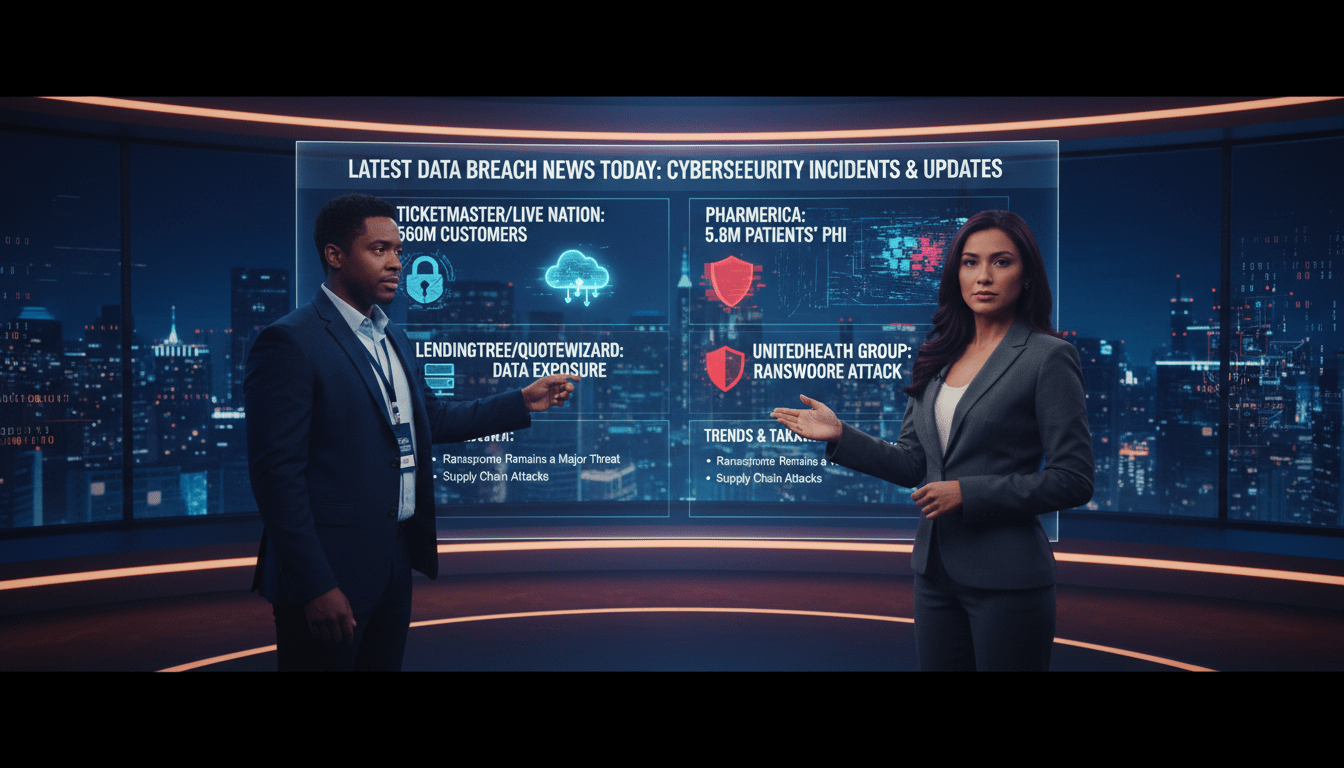
Latest Data Breach News Today: Cybersecurity Incidents & Updates
Here’s what’s happening right now in the data breach landscape—straight to the point: multiple major organizations like Conduent, Panera Bread, Betterment, SUNY Research Foundation, TriZetto Provider Solutions, BridgePay, Conpet, and the European Space Agency have disclosed newly uncovered cyber incidents, ranging from massive exposure of personal data to ransomware disruptions. These breaches span government, healthcare, food service, finance, and critical infrastructure, underlining the ongoing threat and growing sophistication of cybercrime.
Conduent’s Massive Impact: Millions Exposed
Conduent, a government service contractor, announced a staggering breach affecting at least 25 million Americans. Sensitive data including Social Security numbers and health insurance records were compromised. In Texas alone, 15.4 million people were impacted—nearly half the state’s population—and Oregon reported 10.5 million affected, with additional cases in Delaware, Massachusetts, and New Hampshire .
The breach stemmed from a ransomware attack by the SafePay group. Although the intrusion happened in late 2024, it wasn’t identified until January 2025, leaving many states scrambling to assess the fallout . Conduent insists no data was publicly leaked and that response steps were timely—though lawsuits argue otherwise.
Panera Bread: Contact Info Leak, but No Financial Data
Panera Bread saw over 5 million customer records exposed by the ShinyHunters group. Stolen details include names, emails, phone numbers, and addresses; thankfully, financial information was not involved .
Though this primarily raises phishing and social engineering risks, it still underscores serious flaws in protecting even basic user data.
Betterment: Social Engineering Breach Hits Investment Platform
Betterment disclosed a breach impacting roughly 1.4 million accounts. Attackers phished an employee to bypass security, allowing them to send credible-looking phishing emails to users. Exposed data ranged from email addresses, names, and regions to, in some cases, phone numbers or birthdates .
CrowdStrike assisted in verifying that no credentials or accounts were directly breached. The advisory from Betterment emphasized vigilance against phishing attempts moving forward.
SUNY Research Foundation: Notification Delays Under Scrutiny
A data breach at the SUNY Research Foundation compromised staff personal data—including Social Security numbers—via a zero-day flaw in Oracle’s eBusiness Suite, between August 9–11, 2025. Discovery took until October, but employees weren’t notified until late January 2026—far beyond the 30-day requirement in New York State . The delay has attracted criticism and litigious interest.
TriZetto Provider Solutions: Estimates Grow into the Hundreds of Thousands
What was once a moderate-sized breach at TPS has ballooned. Now estimated to affect over 700,000 people, it involved health and personal data but not medical diagnoses or payments . The breach began in November 2024, though it only came to light in October 2025, and several lawsuits are already in progress.
BridgePay Ransomware Disrupts National Payments Network
BridgePay, a key U.S. payment gateway provider, faced a ransomware attack on February 6, 2026, disabling major systems like APIs and virtual terminals. Merchants were forced into cash-only operations. Federal agencies including the FBI and Secret Service are now involved in the investigation .
Conpet: Romania’s Pipeline Operator Hit by Ransomware
In early February, Romanian pipeline operator Conpet was hit with a ransomware attack by Qilin. Nearly 1 TB of internal documents—including financial records and passport scans—were allegedly stolen, though core infrastructure remained unaffected .
European Space Agency: Gigantic 500 GB Data Leak
Attackers tied to Scattered Lapsus$ Hunters exfiltrated approximately 500 GB of technical data from the European Space Agency in a breach dating back to September 2025. The data reportedly involved collaborations with SpaceX, Airbus, and others .
BreachForums: Forum Gets Breached
Even data breach forums aren’t safe. BreachForums, known for its illicit content, was itself breached in January 2026—leaking private messages, plaintext passwords, IPs, and metadata for about 324,000 accounts . Paradoxically, the leak came from a place built on stolen data.
Trends, Patterns & What It All Shows
Rising Sophistication and Cross-Sector Impact
These incidents point to growing sophistication. Ransomware remains a dominant tool—but social engineering, cloud misconfiguration, vulnerable backup systems, and zero-day flaws are increasingly exploited.
Delayed Detection and Notification Are Recurring
Most breaches occurred months before detection and notification—leading to hidden damages and legal liabilities. Delays like SUNY’s are now under legal scrutiny.
Exposure Does Not Always Mean Financial Theft—Still Dangerous
Even when financial data isn’t leaked (Panera, Betterment), exposed contact info remains a huge risk for follow-up attacks.
Infrastructure Risk Is Real
BridgePay and Conpet highlight how breaches can disrupt vital services, not just data via breaches.
Federal & International Eyes on Cybersecurity
Involvement of FBI, Secret Service, and cross-border investigations (as with ESA) shows the geopolitical weight of modern cyber threats.
“These breaches show how attackers are getting more creative—moving beyond classic hacking into social engineering, ransomware, even targeting backup systems,” says a cybersecurity analyst. Recovery takes time, but faster detection and layered defenses are key.
Conclusion
Today’s spotlight on data breach news makes one thing abundantly clear: no sector is immune. Whether it’s government service providers, food chains, fintech, healthcare, payments, pipeline management, or even illicit forums—they all can be attacked. Common threads include delayed detection, rising sophistication, and failure to secure peripheral systems like backups or cloud services. The imperative is visible: organizations must embrace proactive defense, staff training, rapid detection, transparent disclosure, and legal readiness. Consumers, on the other hand, should stay vigilant, monitor accounts, and use strong protections like identity monitoring and phishing resistance tactics.
FAQs
What should I do if my data was in one of these breaches?
Check breach-specific notices or sources like Have I Been Pwned. Monitor your mail, emails, and credit statements. Set up free or paid identity monitoring if offered.
Were financial details compromised in most of these breaches?
Financial data wasn’t necessarily exposed—in many cases only contact or demographic info was taken. But that alone makes phishing attacks more effective.
Why do some breaches take months to detect or notify?
Often, breaches exploit obscure systems or zero-days. Investigations and forensic analysis take time, and legal notification windows differ across states—which has caused criticism when delayed.
Does ransomware always result in data theft?
Not always. Ransomware might encrypt data without exfiltrating it. But many modern attacks involve both encryption and data theft, increasing leverage for attackers.
How can businesses reduce breach risks?
Implement multi-factor authentication, secure backups, regular patching, employee security training, breach simulations, and collaborate with forensic specialists before incidents happen.
Are breaches like ESA’s and BridgePay’s under government purview?
Absolutely. Infrastructure disruptions and national-sensitive operations trigger law enforcement, regulatory, and even international cybersecurity action.
Word count: approximately 1,365 words














Leave a comment