

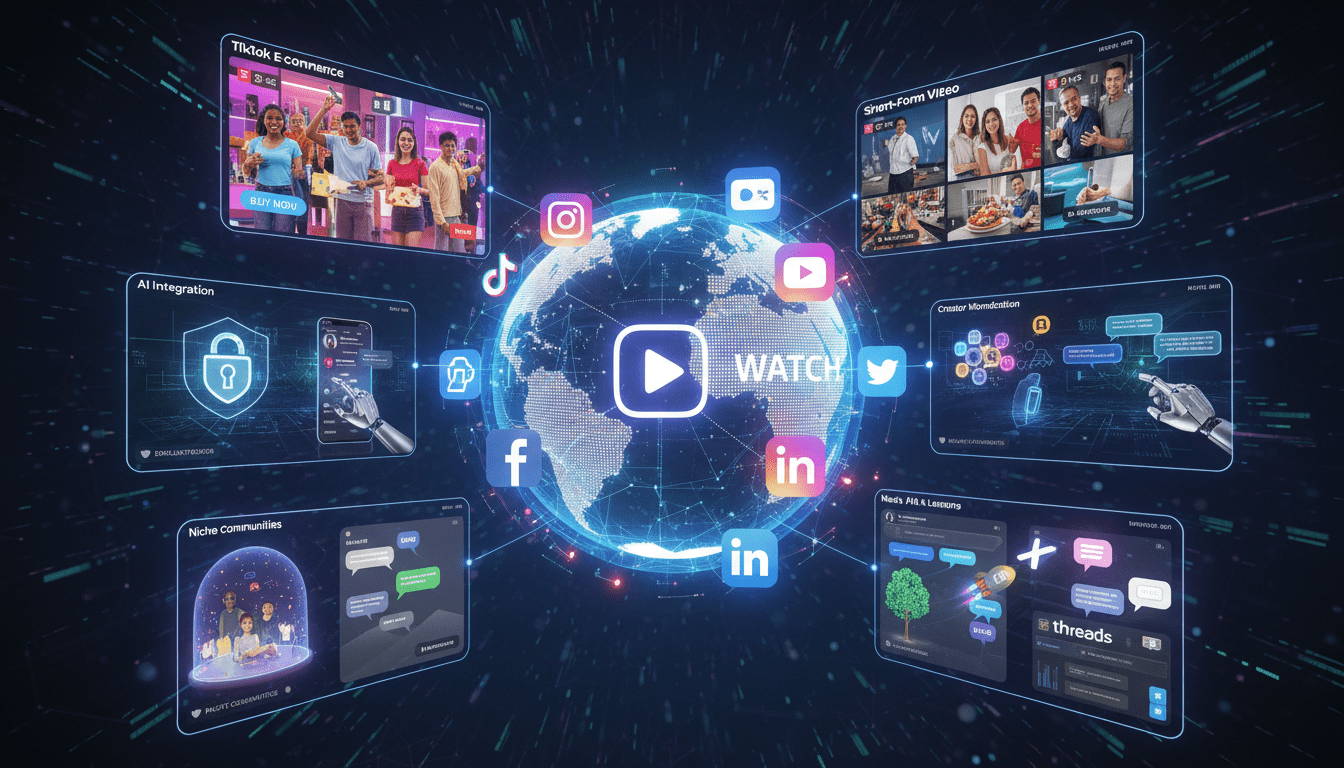
Social media platforms are facing major shifts today—from high-stakes legal challenges and explosive new competitors to sweeping regulatory changes and evolving user habits.
Major Legal Battle: Social Media on Trial for Child Safety
A landmark trial has kicked off in Los Angeles, where Meta (Instagram) and Google (YouTube) are being held accountable for allegedly addicting children through intentionally manipulative design features. The plaintiff’s attorney compared platforms to casinos and drugs and referenced Meta’s internal “Project Myst” that acknowledged youth addiction risks—despite having minimal parental control safeguards. This case may set the tone for future legal and regulatory scrutiny.
New Players Emerge—UpScrolled’s Meteoric Rise
In response to controversy around TikTok’s new ownership, a Palestinian-founded app called UpScrolled has surged in popularity. Between late January and early February 2026, downloads soared—reaching around 2.5 million users across the U.S. and Canada—highlighting how political shifts can reshape platform loyalties.
Tightening Rules: India Introduces AI Content Regulations
India has introduced strict new rules requiring social media platforms to clearly label AI-generated or deepfake content—and remove harmful posts within three hours. This move signals a growing global trend toward AI content accountability and user safety.
Who Gets News from Social Media? Demographic Trends
Social platforms continue to play a pivotal role as news sources—especially for younger users and diverse communities:
- Roughly 38% of U.S. adults regularly get news from Facebook; YouTube trails close behind at 35%.
- TikTok, Instagram, X, and Reddit also feed news—each reaching about one-fifth or less of users.
- TikTok stands out with sharp growth: among Americans under 30, 43% regularly get news there—up from 9% in 2020.
Fragmented Usage: How Platform Behavior Is Shifting
Studies show U.S. social media use is fragmenting: while overall activity declines, younger and older users increasingly disengage. Platforms like Facebook, YouTube, and X lose ground, while Reddit and TikTok grow modestly. The landscape is becoming more niche-driven and divided.
What This Means for Brands and Users
- The LA trial underscores how user safety can no longer be sidelined. Platforms must be proactive, not reactive.
- Alternatives like UpScrolled highlight how quickly user behavior can pivot.
- India’s regulatory move may be a model for global AI content oversight.
- Brands should tailor content strategies across platforms, knowing younger audiences are migrating toward TikTok and Instagram for news.
Expert Insight
“We’re seeing social media platforms under a new microscope—legally, politically, and from their own audiences. Safety, transparency, and trust aren’t just ethics—they’re survival.”
Concluding Thoughts
Today’s social media scene is anything but static. Legal scrutiny, geopolitical backlash, regulatory overhaul, and evolving user behaviors are redefining how platforms operate. For brands and content creators, fluency in demographics, news trends, and emerging alternatives is crucial. The only constant is change—stay alert, stay adaptive.
FAQs
What is the biggest legal challenge currently facing social media platforms?
A high-profile trial in Los Angeles accuses Meta and Google of designing addictive features targeting children, potentially reshaping future regulations and platform behavior.
Why is UpScrolled gaining traction?
UpScrolled surged after TikTok’s controversial U.S. purchase prompted users concerned about content suppression to explore alternatives—resulting in millions of downloads.
What new rules is India implementing on AI-generated content?
India now mandates labeling of AI or deepfake content and requires platforms to take down harmful posts within three hours—significantly tightening oversight.
Which social platforms lead users to news most frequently?
In the U.S., Facebook and YouTube are the top sources, with about 38% and 35% respectively of adults regularly using them for news. TikTok and Instagram follow, particularly among younger users.
How is social media use changing overall?
Use is becoming fragmented and polarized. Traditional platforms are losing traction, while niche platforms like Reddit and TikTok are growing modestly, reflecting a more divided digital space.












Leave a comment