

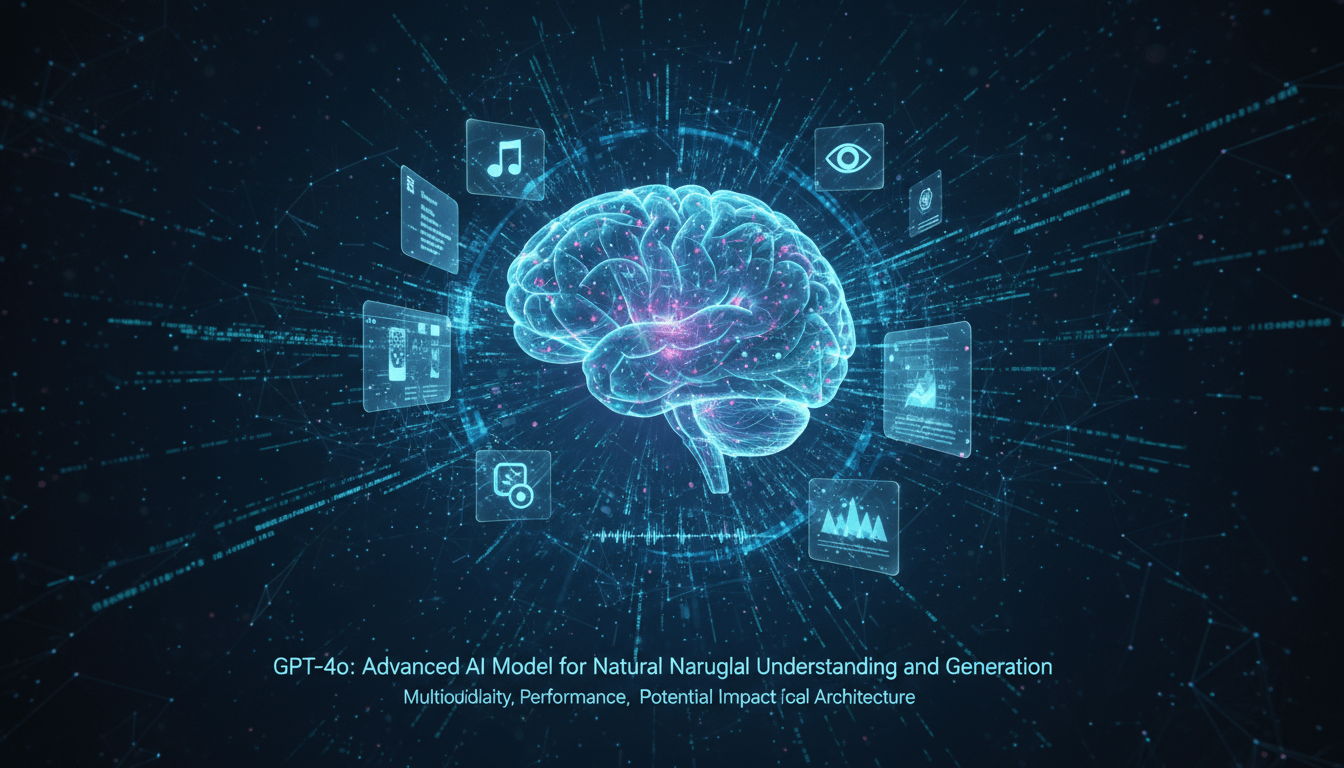
GPT‑4o is the most advanced version in the GPT‑4 family, combining vision and language understanding in a single model. It reads text, sees images, and generates responses that incorporate both. In short, GPT‑4o understands the world more like humans do—mixing what it sees with what it reads to create smarter, more helpful answers.
Why GPT‑4o Matters: A Breakthrough in Multimodal AI
Turning Vision into Dialogue
Most AI models stick to just one mode—either text or images. GPT‑4o breaks that barrier. It can:
– Analyze a photo you upload and respond based on what it sees.
– Generate captions that match tone, context, and detail.
– Switch naturally between describing visuals and writing thoughtful text.
This blend opens up new paths for real-world use—like helping doctors interpret medical scans, or guiding shoppers by understanding product photos.
Natural, Conversational Integration
It’s not just the ability to see and read—it’s how GPT‑4o responds. Conversations feel more human. It might comment on lighting in a photo, or ask a follow‑up if something looks odd. That flexibility brings a more intuitive AI experience.
“GPT‑4o bridges language and vision in ways that make interactions feel seamless—like talking to someone who sees and reads just like you do.”
Real‑world use cases already show how this helps. Designers get layout feedback from a screenshot. Students snap math problems, and GPT‑4o breaks them down in plain language. It’s not perfect, but it’s in active use and improving fast.
Inner Workings: How GPT‑4o Combines Senses
1. Joint Training on Text and Images
GPT‑4o learned from massive datasets—where text and images are paired. Think:
– Descriptions and captions in books.
– Annotated photos on the web.
– Visual context combined with detailed language.
This training means GPT‑4o understands relationships between what’s seen and what’s written, not just one or the other.
2. Multimodal Embeddings
Instead of separate modules for vision and text, GPT‑4o uses shared “embeddings” (think of these as unified meaning representations). This means vision and language share a conceptual space. That makes responses more coherent and contextually rich.
3. Flexible Output Modes
GPT‑4o doesn’t just describe images—it can summarize them, infer mood, compare multiple images, or even generate new visuals based on prompts. Developers can tailor its behavior, from detailed analysis to quick summaries.
Practical Impacts: Real-World Examples
Healthcare Imaging
GPT‑4o assists clinicians in spotting key details on scans or photos. It can highlight anomalies and explain them in everyday language. But doctors remain in the loop—a smart assistant, not a replacement.
Educational Tools
Imagine a student snapping a photo of a physics graph or math problem. GPT‑4o can:
– Interpret axes and trends.
– Suggest next steps.
– Break down complex ideas simply.
That kind of help is already in research labs, classroom trials, and pilot apps.
Creative Content & Design
Designers love feedback. With GPT‑4o, you can upload your layout, mood board, or promo graphic, and it offers suggestions. It might suggest color tweaks or highlight alignment issues.
Accessibility for All
For visually impaired users, GPT‑4o adds a layer of description that’s more nuanced than “there’s a person in a room.” It’ll interpret context, expression, or scene details—making visual content more understandable.
Advantages and Limitations at a Glance
| Strengths | Limitations |
|——————————-|———————————————|
| Natural multimodal interaction | Occasional misinterpretations or biases |
| Flexible, developer-adjustable | Visual reasoning still imperfect |
| Enhances productivity in many fields | Requires careful oversight for sensitive tasks |
GPT‑4o handles many tasks elegantly, but it’s not foolproof. Misunderstandings can happen—especially with abstract visuals. And in critical areas like medicine, final judgment must stay human.
Looking Ahead: GPT‑4o’s Emerging Trends
Broader Adoption in Mediums
Expect GPT‑4o in more platforms. Business apps may use it to process whiteboard photos. Social tools could auto-caption posts using tone and humor. Even customer support might use it to diagnose product issues via image.
Smarter Reasoning
Future versions are likely to improve at reasoning through visuals. That could mean better understanding steps in a chart or detecting subtle cues in a diagram. Multimodal “commonsense” reasoning remains an active frontier.
Ethical and Bias Considerations
Visual models can inherit biases. GPT‑4o could misinterpret skin tones or cultural contexts. OpenAI and researchers are working to reduce these effects. Transparency, fairness testing, and community feedback will shape safer deployment.
Integrating GPT‑4o: A Quick How-To
For Developers
- Use the multimodal endpoint (check API docs or your platform).
- Choose prompt strategy:
- Descriptive: Upload image + ask for explanation.
- Interactive: Ask follow-ups (“what’s happening here?”).
- Handle responses with fallback logic—check unexpected output or ambiguous phrases.
For Organizations
- Pilot GPT‑4o in small teams—get feedback early.
- Train staff on its abilities and limits.
- Use it as collaborator, not authority—especially in regulated fields.
Conclusion
GPT‑4o blends image and language in ways previous models couldn’t. It reads, sees, and responds—bringing powerful, intuitive interaction to fields from healthcare to education to design. It’s not without flaws—bias, visual reasoning edge cases, and oversight needs remain—but its real-world applications are expanding fast. As it evolves, GPT‑4o promises more seamless, human-like AI that understands both text and the world visually.
FAQs
What makes GPT‑4o different from other GPT models?
GPT‑4o combines image and text understanding within one model. Unlike text-only versions, it can see what’s in an image and discuss it naturally.
Can GPT‑4o be used in healthcare safely?
It supports medical tasks by analyzing visuals like scans. But human oversight is essential—it’s a tool, not a replacement for medical professionals.
How do developers interact with GPT‑4o?
You send images along with text prompts via the multimodal API. You can ask descriptions, ask follow-ups, or request visual comparisons depending on your needs.
Does GPT‑4o replace accessibility tools?
It enhances them. GPT‑4o adds richer, more descriptive interpretations of visuals. Yet, it doesn’t eliminate the need for accessible design and human assistance.
Are there biases in image interpretation?
Yes. Visual models can misread cultural cues or appearance-based context. Ongoing testing, transparency, and feedback efforts aim to reduce those biases.
What’s next for GPT‑4o?
Look for smarter visual reasoning, broader app integration, and better fairness oversight. It will get more context‑aware and more widely used, shaping how we interact with AI.










Leave a comment