
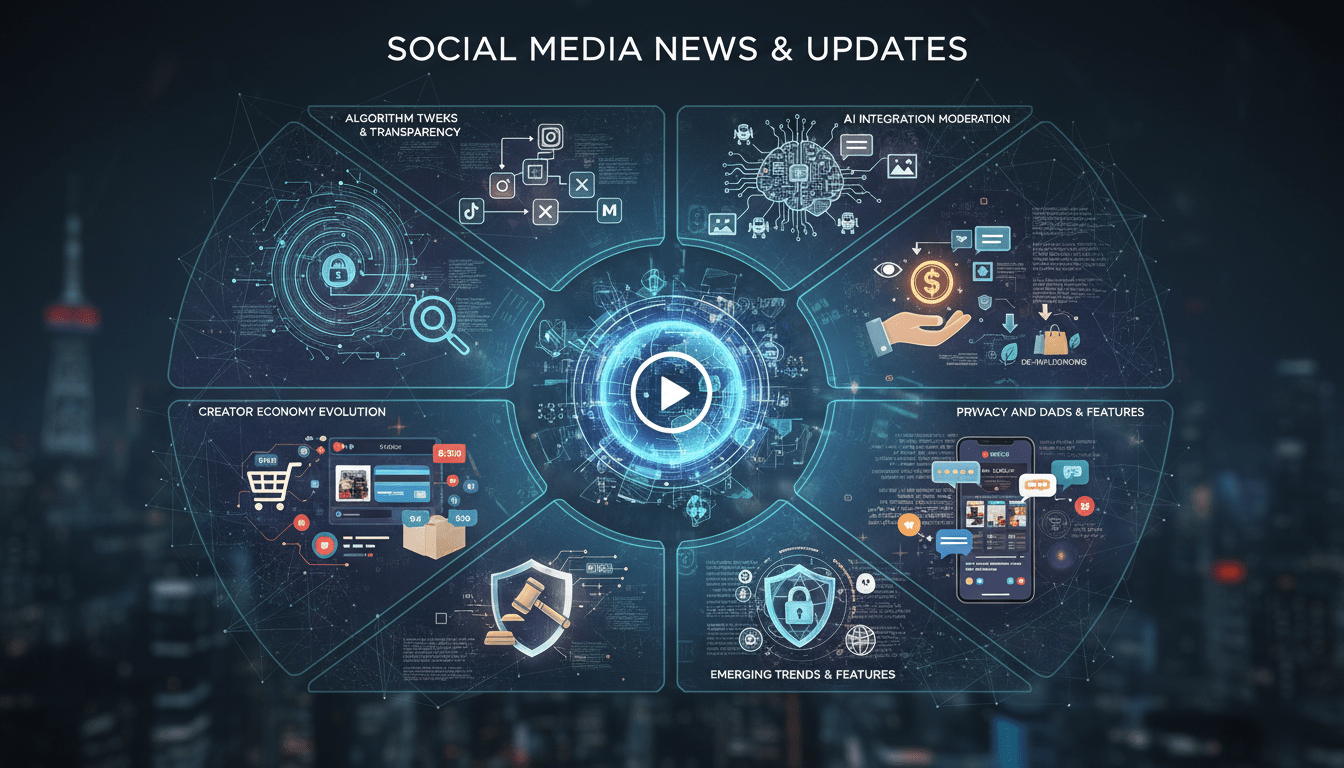
Here’s the straight answer: you need to know that social media in early 2026 is being reshaped by safety rules, fresh laws, new tech features, and rising platforms. Platforms like Meta, TikTok, Snap, and more are rolling out safety checks and updates. Laws in places like India, Australia, France, the UAE, and U.S. states are tightening age and content controls. At the same time, emerging apps like UpScrolled and Sora are gaining attention, while established platforms like Instagram and X keep evolving their features.
What’s New in Platform Safety and Regulation
Teen Safety Ratings Across Major Platforms
Meta (Facebook and Instagram), TikTok, and Snap have pledged to undergo independent evaluations on how they safeguard teen mental health. The review covers harmful content, app design, and features like “take-a-break” reminders. Platforms that score well get a blue shield badge; those that lag behind get flagged. This move offers users transparency while lawmakers push for enforceable rules.
India’s Tougher AI Content Rules
Starting February 20, 2026, India will require social media platforms to label AI-generated content—like deepfakes or synthetic media—and act within 3 hours of a takedown notice, down from 36 hours. Platforms like Facebook, Instagram, and YouTube must comply to combat misinformation swiftly.
Australia’s Roblox Under Investigation
Australia has started investigating Roblox for child safety issues. This comes in the wake of a December 2025 law banning social media for users under 16 unless age verification (through selfies, documents, or bank details) is enforced. Platforms must now ensure age compliance, and authorities are scrutinizing Roblox’s measures.
Illinois Proposes Age Restriction Law
In Illinois, a proposed bill would bar anyone under 17 from having social media accounts. Platforms would need age assurance systems. If the law passes, there’s a 180-day window to comply, with enforcement and penalties overseen by the state attorney general.
France Moves to Ban Under‑15s
France passed a first reading of a law banning social media accounts for those under 15. Verification for all accounts—new and existing—starts in September 2026. Privacy-friendly “double anonymity” tools are encouraged to balance safety and personal data protection.
UAE Requires Influencer Permits
As of February 1, 2026, the UAE requires all social media influencers to hold an Advertiser Permit to post promotional content—whether paid or unpaid—ensuring tighter control on digital advertising across platforms.
Fresh Features and Platform Shifts
Instagram’s “Your Algorithm” Control
Instagram is giving users the power to tweak their Reels feed using a feature called “Your Algorithm.” It shows your top interests and lets you adjust content preferences directly, offering more control than ever before.
TikTok’s Age Verification in the EU
TikTok is beefing up age-verification in the EU, using behavioral cues and profile info to flag possible under-13 accounts. Flagged accounts go through human review. Additional safeguards include limiting direct messages for under-16s and set time restrictions for under-18s.
Platform Updates Snapshot
From SocialBee and Emplifi:
– Meta introduced two AI models (“Fast” and “Thinking”) and is testing premium feature subscriptions across Facebook, Instagram, and WhatsApp.
– Facebook is testing a new UI that moves settings to the left of the header.
– Instagram: “Manus AI” shortcut, rebranded “Instants,” camera lock screen access, plus more edits features.
– Threads now supports stickers and linear highlights.
– TikTok auto-links posts about shows/movies to the relevant content (e.g., a movie page).
– X added “Paid Promotion” labels and image support in polls.
– LinkedIn launched “Vibe Coding,” a gen‑AI skill qualification.
TikTok and YouTube Engagement Tools
From LinkedIn recap:
– TikTok must tweak its algorithm under EU pressure for “addictive design.” They also launched Streaming Ads (for streaming services) and added greeting cards and DM features.
– YouTube: surpassed 325M paid subs, expanded auto‑dubbing to 27 languages, and enabled live stream reformatting (horizontal to vertical with unified chat).
– X launched image‑enabled polls and Collaborative Notes—AI-generated context that users refine collaboratively.
Rising Stars and New Platforms
UpScrolled’s Dramatic Rise
UpScrolled, born in June 2025, has become a surging platform with short-form video and microblogging. A TikTok backlash in the U.S. pushed downloads up ~2,850% in late January 2026. As of February 2, it has 2.5 million users and is leading downloads in the U.S., Canada, and parts of Europe.
Sora by OpenAI
Sora is a fast‑uptake app from OpenAI that generates AI‑created video clips on demand—for example, “a cat skateboarding in Times Square.” Launched in late 2025, it gained over a million users in just five days.
Poosting: Brazil’s Algorithm‑Free App
Poosting is a Brazilian social network launched in 2025 that favors chronological feeds, minimal metrics, and strong anti‑misinformation features. It ranked among the top downloaded social apps on Android worldwide in mid‑2025.
Bluesky’s Evolution
Bluesky keeps expanding: in January 2026 it unveiled a “Live Now” badge for streamers, following verification tools, trending topics, and customizable moderation feeds. It may not have Meta-scale reach, but it’s gaining traction among niche user bases.
Why It Matters to You
The shift in social media isn’t just technical. Platforms are under new scrutiny for teen safety, misinformation, and AI content. Emerging apps offer alternatives that value privacy, freedom, or AI-generated creativity. These changes affect everyone—from parents and creators to brands and policymakers.
These trends, combined with platform features and shifting demographics, are shaping social media’s next chapter.
Conclusion
Platforms are being pushed to prioritize safety and accountability, especially for minors. Laws from India to France are enforcing stricter verification, while Meta, TikTok, and others are delivering new tools to give users more control over content. At the same time, newcomers like UpScrolled and Sora are shaking up the scene. For brands, creators, and users, understanding this mix of regulation, innovation, and emerging alternatives will be key to staying informed and adapting strategies in 2026.
FAQs
Q: What’s the blue shield badge all about?
Independent ratings check how platforms protect teens. Those that do well earn a blue shield, signaling safer design and content practices.
Q: When do India’s AI content rules start?
They kick in February 20, 2026. After that, platforms must label AI content and remove violations within 3 hours—not 36.
Q: Why is UpScrolled trending now?
A TikTok takeover sparked a backlash, boosting UpScrolled downloads by thousands of percent. By Feb 2026, it had 2.5M users.
Q: What’s unique about Sora?
Sora auto-generates AI videos based on prompts—like TikTok but every clip is AI-created. Launched late 2025, it hit 1M users in 5 days.
Q: What age restrictions are being enforced globally?
France plans to ban under-15s. Australia and Illinois push 16–17 age verification or bans. UAE needs influencer permits. China? (No major updates noted.) It’s a global age‑safety trend.
Let me know if you want deeper dives into any update or platform.