
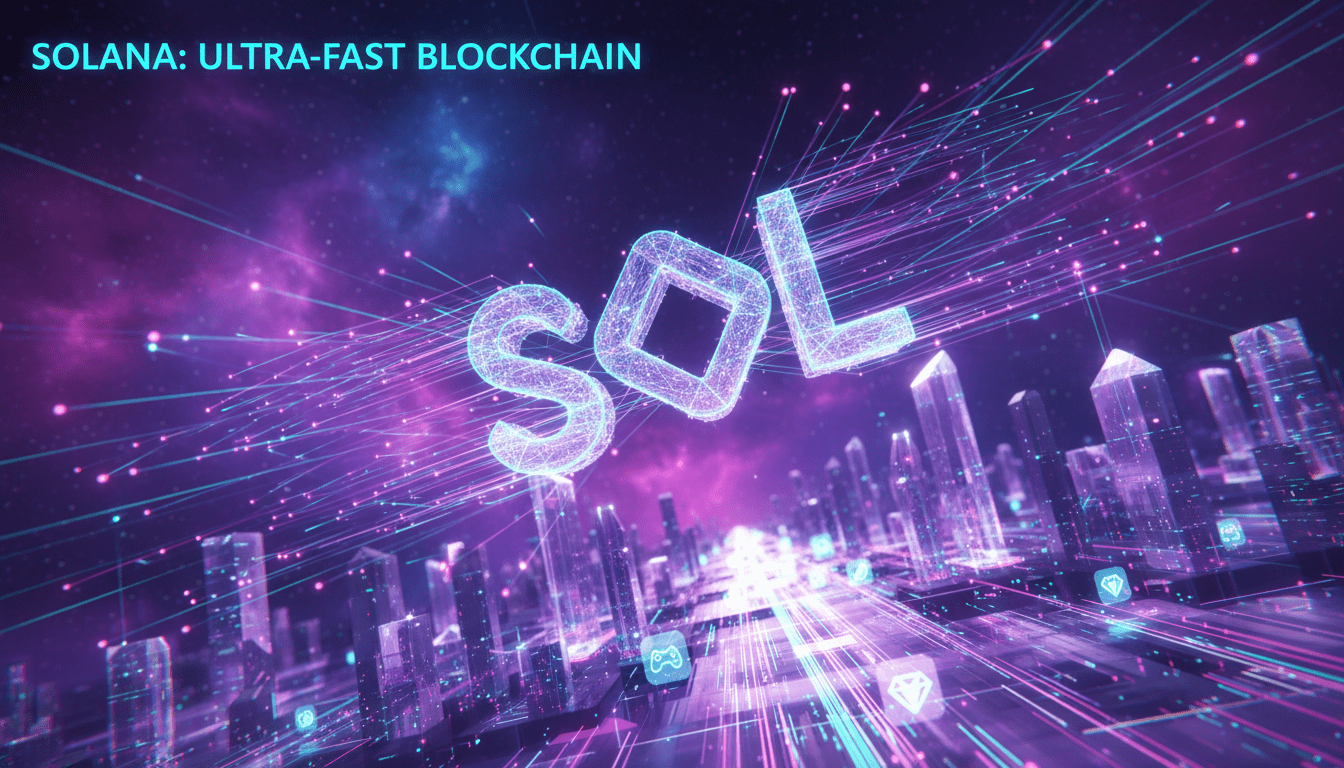
Solana crypto has been turning heads for the past couple of years, and the question on everyone’s mind is: “Solana Crypto: Is SOL the Next Big Thing?” It’s a fair one. On one hand, the blockchain boasts lightning-fast transactions and growing institutional interest, while on the other, skeptics worry about hype cycles and volatility. This article tracks the story of SOL’s ascent—and whether it has staying power.
Solana’s Ecosystem Strength and Usage Growth
Solana is stacking credibility through real-world adoption and raw performance improvements.
Rocketing On-Chain Metrics
Solana processed approximately 33 billion transactions in 2025, a massive leap from the prior year, and dwarfed Ethereum’s output of around 520 million transactions . Daily throughput averaged 1,100+ transactions per second, up from about 819 TPS in 2024, further reinforcing Solana’s scalability .
– Additionally, the network recorded zero outages in 2025, with block time variability improving roughly eightfold, signaling rising reliability .
– On the stablecoin front, Solana surged ahead, owning the fastest-growing stablecoin ecosystem, with supply exploding from $5.2B to about $16.8B and USDC usage dominating .
These metrics suggest Solana isn’t just growing—it’s sprinting.
Institutional Momentum and Real-World Asset (RWA) Tokenization
Big-name players are embracing Solana. For instance, a consortium of major banks including HSBC and Bank of America is working with R3 to bring tokenized stocks and bonds onto Solana’s ledger . Plus, Brera Holdings—a European soccer investment firm—rebranded itself as “Solmate” and pivoted into a Solana-based treasury following a massive inflow supported by ARK Invest and others, sending its stock up nearly 460% .
These moves hint at a shift beyond speculation toward institutional integration, tapping into tokenization trends like RWA (Real World Assets).
Technological Enhancements Fueling the Future
Behind Solana’s performance is a framework of infrastructure upgrades driving further potential.
Firedancer, Alpenglow, and BAM
Upgrades such as Firedancer (targeting over 1 million TPS), Alpenglow (bringing finality down to 150 ms), and BAM (MEV optimization) are already being rolled out or tested across the network . These enhancements are more than benchmarks—they’re the foundation of Solana’s push into scalable, enterprise-grade blockchain services.
Roadmap Highlights
- SPEs (Solana Permissioned Environments) are in beta, offering private, compliant enterprise chains built with AWS .
- A multi-client validator ecosystem aiming for five implementations by 2026 reduces centralization risk .
- Web2 gaming studios are being courted through GameShift, making Solana integration smoother for developers .
These moves underscore a strategy focused not just on speed, but trust, customization, and developer access.
Price Forecasts: Realistic or Hype?
Pricing projections for SOL range from modest to sky-high—depending on who you ask.
Conservative to Moderate Estimates
- CoinCodex forecasts SOL trading between about $103 and $143 in 2026, averaging around $131, representing a potential 36% gain .
- Cryptonews projects 2026 average price near $235, with highs reaching $244 .
- Site estimates like Coinscipher suggest a modest average of $125–$150 by 2026 .
Bullish Confidence from Institutional Forecasts
- Quickex cites institutional desks and Standard Chartered suggesting a potential $420–$620 price range in 2026, especially if a spot SOL ETF launches .
- InvestingHaven collates various expert forecasts ranging from $95 to $425, with some suggesting targets closer to the $400–$500 mark or even higher, depending on ETF approval and adoption .
- Deeper research models indicate:
- Conservative scenario: $400–$600
- Bullish scenario: $800–$1,200, if institutional flows and DeFi/RWA adoption accelerate .
Diverging Long-Term Projections
- Coinpedia sets optimistic 2026 averages at about $410, with highs of $510, and projects massive gains into the late 2030s .
- Cryptonews expects an all-time high of $340 in 2030 with average of $295 .
- CryptoNewsZ captures extreme views, from bearish $9 to bullish $3,211 by 2030 .
Clearly, forecasts are all over the map—a sign of both optimism and uncertainty.
Challenges, Risks, and Skepticism
Even with the technological gains, Solana faces persistent challenges.
- Overhyped cycles: Price surges tied to memecoin activity or speculative mania can be unsustainable—case in point, the Trump meme coin bull run .
- Macroeconomic and regulatory volatility: Any tightening or delays in ETF approval could significantly dampen bullish projections .
- Competition and maturity: While Solana leads in speed and activity, Ethereum still dominates TVL (59% vs 8%), indicating a long road ahead in terms of developer trust and financial gravity .
Expert Insight
“If Solana clears key resistance and the macro/liquidity backdrop tracks institutional assumptions, a $420–$620 corridor appears on the table.”
— Highlight from institutional outlook models
This quote encapsulates cautious optimism: Solana’s architecture matters, but external conditions will shape the outcome.
Conclusion
Solana stands at a compelling crossroads. The network’s impressive on-chain growth, technological upgrades, and institutional embrace suggest a maturity that’s often lacking in other chains. Forecasts range from modest mid-hundreds to bullish four-digit peaks—all hinging on DeFi, RWA expansion, and policy clarity.
Perhaps SOL isn’t “the next big thing” by default—but it’s staking a strong claim in that direction.
FAQs
What makes Solana stand out among other blockchains?
Solana delivers exceptional speed, averaging over 1,100 TPS in 2025, zero outages, and enhancements like Firedancer and Alpenglow that improve performance and finality. Its robust stablecoin usage and rapidly growing DeFi/mobile ecosystem also contribute to its appeal.
How credible are the price predictions for SOL?
There’s a wide variance. Conservative estimates suggest modest gains into the mid-2020s, while bullish scenarios hinge on ETF approvals, institutional adoption, and continued DeFi expansion. As always, forecasts should be read with cautious skepticism.
Are institutions truly backing Solana?
Yes—partnerships with banks via R3, treasury moves by Brera/Solmate, and ETF-related speculation highlight rising institutional interest in Solana’s capabilities and token.
What technological upgrades are underway for Solana?
Upgrades include Firedancer (1M+ TPS), Alpenglow (150ms finality), BAM (MEV enhancement), SPEs for enterprise compliance, GameShift for gaming integration, and a multi-client validator ecosystem—all aiming to make Solana scalable, customizable, and enterprise-ready.
Could Solana face serious risks moving forward?
Absolutely. Price volatility, regulatory uncertainty (like ETF delays), speculative hype, and competition from chains like Ethereum still pose risks. Sustaining infrastructure growth versus pure headline-driven demand remains critical.
When might we see mainstream adoption of SOL?
Adoption is already underway, with growing stablecoin activity, DeFi, institutional treasuries, and tokenized assets. If regulated instruments like ETFs roll out in 2026, mainstream accessibility could accelerate significantly.
Solana’s story feels less like wishful thinking and more like one with momentum and craftsmanship—so keep an eye on the next chapter.